Friday, March 20, 2009

MAP OF THE RUINS OF TELL EL-AMARNA (18TH DYNASTY)


Akhenaten moved his capital to the barren site of Tell el-Amarna, where a city was designed and built. Soon after his death, the town was abandoned and its stones were used elsewhere in building projects. This map, by G. Erbkam, an architect with the Lepsius expedition in the 1840s, was part of an extensive plan of the visible ruins of Tell el- Amama.

Wednesday, March 18, 2009

Climb Chimborazo and See the World


Alexander von Humboldt, Vegetation zones on Mount Chimborazo (Alexander von Humboldt and A.G. Bonpland, Geographie der Pflanzen in den Tropenländern, ein Naturgemälde der Anden, gegründet auf Beobachtungen und Messungen, welche vom 10. Grade nördlicher bis zum 10. Grade südlicher Breite angestellt worden sind, in den Jahren 1799 bis 1803, Staatsbibliothek zu Berlin, Kartenabteilung).

Peter J. Bowler

Why was Charles Darwin so eager to join H.M.S. Beagle on its voyage to South America? Part of the answer lies in the fact that as a student at Cambridge he had been enthralled by Alexander von Humboldt's writings about South America. Darwin longed to follow Humboldt on a voyage to the tropics. He was inspired by Humboldt's vision of a new science that would uncover the multitude of relationships maintaining Earth's physical structure and governing the lives of its plant, animal, and human inhabitants.

Nor was he the only one to be inspired. A whole generation of naturalists participated in what historians have called "Humboldtian science" (1-3). This was a project to measure and map every feature of the Earth, with the aim not of mere description but of throwing light on the ways in which physical and organic processes interact to sustain and develop the world in which we live. The Humboldtian vision was not a static one: It incorporated the new science of geology, which explained how the current state of Earth and its inhabitants had been formed by natural processes. In this important respect, Darwin's theory of evolution, in which populations are shaped by adaptation to an ever-changing world, was a direct (if unanticipated) product of Humboldtian science. Modern efforts to create a science of the environment also derive from this vision.

Humboldt straddled the transition from the 18th-century Age of Enlightenment to the Romantic era of the early 19th century. Historians still debate his position within the cultural developments of the time (4-6). His vision of nature as a complex system of interactions that we perceive through the imagination as well as the senses certainly resonates with the Romantic worldview of Johann Wolfgang von Goethe, whom Humboldt knew and admired (6, 7). For Humboldt, humanity's perception of nature's unity and power was as much aesthetic as it was rational, a visionfar more in tune with Romanticism than with the dry natural theology of Darwin's mentors.

But his passion for precise description and accurate measurement reflects the more rationalist attitude of the Enlightenment (4, 5, 8). His concern for the predicament of the human inhabitants of the regions he visited has led some to see him as a political radical, in the tradition of the Enlightenment and the French Revolution. In the end, he defies assignment to any of the neat categories erected by historians, and perhaps it is this versatility that allowed him to influence so many later developments.

Humboldt was born in Berlin on 14 September 1769. He studied at the universities of Frankfurt and Göttingen, and then moved on to the mining academy of Freiburg in Saxony. Here he came under the influence of the geologist Abraham Gottlob Werner, who was pioneering the study of what we would now call the stratigraphic column. Through years of study, diplomatic work, and as a leader of the Prussian mining service, Humboldt expanded his knowledge of geology. He became interested in the structure of mountains and longed to make a detailed study of volcanoes.

Humboldt recognized that mountains were created by earth movements and volcanism after the sedimentary rocks were laid down, in effect rejecting the strict "Neptunism" of Werner's theory in which deposition from water was theonly agent of change. As did many European geologists, however, he still considered himself a follower of the Wernerian method. Incorporating a role for volcanism did not upset the project to define the sequence of events defining Earth's history: It merely made that history more complex. He identified the stratigraphic position of a distinctive formation that he called the Jura limestone, which was subsequently incorporated by Leopold von Buch into the Jurassic system.

In 1790, Humboldt visited Paris with Georg Forster, who had been a naturalist on Captain James Cook's second voyage. As an ardent liberal, Humboldt was full of praise for the achievements of the French Revolution. After 1796, he became financially independent and continued his studies at Jena, where he met Goethe and Friedrich Schiller. He performed painful experiments on himself in an effort to demonstrate the role of electricity as the life-force. He was also learning the techniques of geodetic and geophysical measurement, because by now he had conceived the project to create "une physique du monde"--a global science based on careful measurement and on the paradigm that all natural forces interact harmoniously to sustain the whole.

Humboldt was anxious to explore outside Europe and planned a trip to North Africa. While waiting to take a ship at Marseilles he was informed that Tunis was unsafe to visit. He decided instead to journey into Spain, where he prepared the first relief map of the region. In Madrid, he attended the royal court and obtained permission to visit the Spanish colonies in South America.

Accompanied by the botanist Aimé Bonpland, he arrived in what is now Venezuela in July 1799 and spent the next 5 years exploring the continent, often enduring considerable hardships. Everywhere the two explorers went, they collected plants and took measurements of temperature, air pressure, and Earth's magnetic field. They navigated the Orinoco river and confirmed the existence of a connection between the Orinoco and the Amazon. Throughout the trip Humboldt took notes on the conditions of the human inhabitants, and made a particular study of the economics and politics of Mexico.

In June 1802, Humboldt set out to climb the volcanic mount Chimborazo in the Andes, then thought to be the highest mountain in the world. Although they did not reach the summit, Humboldt and his party ascended to nearly 20,000 feet, the highest point then reached by any European mountaineer. Humboldt was now convinced that volcanoes form in regular lines along fissures in Earth's crust.

In 1804, Humboldt paid a brief visit to the United States before returning to Europe. After further travels in Germany and Italy he settled down in Paris, where he remained until 1827. Here he prepared his results for publication, eventually bankrupting himself because of the enormous cost of producing maps and illustrations. He returned to Berlin to serve as an adviser to the government. He had long wanted to explore Asia to compare the region with what he had observed in South America. When invited by the Czar to explore Russia in 1829, he was able to extend the trip into a major survey of Siberia.

In his publications, Humboldt described a vast range of phenomena, stressing the interactions between the physical, organic, and human worlds. He also pioneered new ways of mapping and depicting relationships (4).Humboldt used cross sections to illustrate the diversity of terrain across extended landmasses. A famous diagram of Chimborazo, published in his Essai sur la geographie des plantes of 1807, describes the zones of vegetation at successive levels, showing how altitude could affect the local climate (6). In 1817, Humboldt introduced the concept of the isotherm to link areas with similar temperatures on a map, again showing how altitude and latitude affected the climate.

It was the interaction of the general with the particular that so fascinated Humboldt. He wanted to understand the general laws of nature, but he knew that the processes governed by those laws were shaped by the local environment in a host of ways not anticipated by earlier naturalists. Yet all these diverse phenomena were integrated into a harmonious whole, and it was Humboldt's aim to understand the relationships involved. To some scholars, this ambition reveals his commitment to the Romantic vision of nature.

At the same time, Humboldt was concerned with the significance to humans of the natural environment. He was ever alert to the ways in which political structures interfered with the ways in which the inhabitants of a region sought to gain their livelihoods. Nicolaas Rupke argues that it was his political and economic study of Mexico, published between 1808 and 1811, that did most to bring him to the world's attention--and this was more a product of Enlightenment liberalism than of Romanticism (5).

But throughout his work, Humboldt stressed how human values shape our perception of nature, in effect becoming the model through which our vision of the world is constructed (9). His Ansichten der Natur (Views of Nature) of 1808 offered an "aesthetic treatment of natural history"--part travel book, part celebration of the diversity of natural phenomena, but all presented to inspire as well as inform. His last great work, Kosmos (1845 to 1862), included accounts of the history of science and discussions of the significance of changing artistic perceptions of nature, especially in landscape painting (10). These elements reveal a focus on the human dimension in science that leftHumboldt increasingly isolated from the scientific community in his later years. He died on 6 May 1859.

Humboldt stressed how human values shape our perception of nature, in effect becoming the model through which our vision of the world is constructed. It was the more empirical aspects of "Humboldtian science" that inspired Darwin and his generation to think about the world in a more interactive way (1, 3). Humboldt's plant geography encouraged Alphonse de Candolle and, through him, a later generation of biologists, who would found what we now call ecology (2). His work in geology and geophysics served as a model for the geological and other surveys that became an important component of mid-19th-century science.

Humboldt had openly appealed to the Royal Society of London and the British Association for the Advancement of Science to lobby the British government for the creation of a world-wide chain of magnetic observatories. Under the direction of Sir Edward Sabine, stations were established in Montreal, Tasmania, the Cape of Good Hope, and Bombay, and Sir James Ross commanded a naval expedition to the Antarctic. Ross located the magnetic south pole, and Sabine's coordinated observations eventually revealed the link between magnetic storms and sunspot activity.

And, of course, Darwin was inspired to visit the tropics, leading to his decision to join the Beagle, his discoverieson the Galapagos islands, and his theory of natural selection. Darwin drew on a variety of sources, but Humboldt's influence, together with that of Charles Lyell, formed the basis of his conviction that the driving force of organic change is the complex web of interactions by which a population adapts to its ever-changing local environment.

Darwin, too, linked the human species into nature. But his theory turned Humboldt's vision on its head as effectively as it demolished the natural theology of William Paley. Despite his lack of explicit religious commitment, Humboldt saw the world as a unified whole whose structure is best revealed by the human imagination. If this vision of nature was Romantic rather than Christian in origin, it was equally vulnerable to the process of erosion begun by the evolutionists. For Darwin, the natural processes of evolution had created the human mind and shaped the way it perceived the world. Humans were not the centerpiece of creation, nor was their aesthetic response to the world a significant factor to be taken into account in the development of a scientific explanation of its origin and structure.

Darwin explored the same complex of interactions as Humboldt, but created a darker picture in which we were the products of forces that owe nothing to our values or our imagination. The mid-19th century's fascination with the idea of progress was in some respects a desperate attempt to retain a special role for humanity as the goal of creation. This was a role which Humboldt had taken for granted but which Darwinism threatened to undermine.

References and Notes

  1. S. F. Cannon, Science in Culture: The Early Victorian Period (Science History Publications, New York, 1978).
  2. M. Nicolson, Hist. Sci. 25, 167 (1987).
  3. P. J. Bowler, The Earth Encompassed: A History of the Environmental Sciences (Norton, New York, 1993).
  4. A. M. C. Godlewska, in Geography and Enlightenment, D. N. Livingstone and C. W. J. Withers, Eds. (Univ. of Chicago Press, Chicago, 1999), pp. 236-275.
  5. N. Rupke, in Geography and Enlightenment, D. N. Livingstone and C. W. J. Withers, Eds. (Univ. of Chicago Press, Chicago, 1999), pp. 319-339.
  6. M. Nicolson, in Romanticism and the Sciences, A. Cunningham and N. Jardine, Eds. (Cambridge Univ. Press, Cambridge, 1990), pp. 169-185.
  7. M. Bowen, Empiricism and Geographical Thought: From Francis Bacon to Alexander von Humboldt(Cambridge Univ. Press, Cambridge, 1981).
  8. D. N. Livingstone, The Geographical Tradition: Episodes in the History of a Contested Enterprise (Blackwell, Oxford, 1992).
  9. M. Dettelbach, in Visions of Empire: Voyages, Botany, and Representations of Nature, D. P. Miller and P. H. Reill, Eds. (Cambridge Univ. Press, Cambridge, 1996), pp. 258-292.
  10. A. von Humboldt, Cosmos, reprint of vol. 1, introduction by N. Rupke (Johns Hopkins Univ. Press, Baltimore, MD, 1997).
  11. Portrait by F. Georg, exhibited at Staatliche Museen zu Berlin. Reprinted with permission.

P. J. Bowler is in the History of Science Program, School of Anthropological Studies, Queen's University, Belfast BT7 1NN, UK.

ENTABLATURES & FLORAL FRIEZES (NECROPOLIS OF THEBES-18TH & 20TH DYNASTIES)


Flowers, like the blue lotus or the papyrus, are the main motif in these patterns. These flowers imitate actual wreaths used as decoration on the walls of houses of the period. The friezes shown in the corners above use the Khekeru pattern, a traditional decorative motif used along the top of walls throughout Egyptian history. These New Kingdom patterns are from private Theban tombs, and often formed the upper border of scenes painted in the first chamber.

Tuesday, March 17, 2009

Ptolemy world map -Modernised

Ptolemy's Goal
The introduction to Geography states what Ptolemy wanted to accomplish, which includes an explanation of the principles of cartography such as giving coordinates to places around the world and geographic features as well as recommendations for making world and regional maps. He then starts his coverage of the world with Europe in Books 2 and 3. He goes on to cover Africa in Book 4 and covers Asia and summarizes his findings in Books 5-8. Geography included 26 colorized regional maps as well as one map of the "known world". Ptolemy stayed away from orthogonal (or cylindrical) world mapping in favor of three other projection types.

Importance of Ptolemy's Geography
Ptolemy's work has been discovered and used through the ages by several noted people around the world. Arabic writer al-Mas'udi, while writing around 956, mentioned a colored map of the Geography which had 4530 cities and over 200 mountains. Byzantine monk Maximus Planudes found a copy of the Geography in 1295, and since there were no maps in his copy, he drew his own based on the coordinates found in the text. The first Latin translation of the Geography was made in 1406 by Florentine Jacobus Angelus, and since this, various translations in other languages have been made available to people all over the world. However, the most important discovery of Ptolemy's Geography may have been made by Christopher Columbus. Columbus obtained one of the first Latin editions of the book (an edition printed in 1475) without the maps. We know that he definitely considered Ptolemy's distances while he was creating his own maps since his text of the Geography has some annotations in it and bears his signature (this text is currently in Madrid). In fact, scholars believe that Ptolemy's information may have encouraged Columbus to make his famous voyage.


LINK

Monday, March 16, 2009

ANCIENT GREEK COLONIES IN ITALY


Abraham Ortelius, in Parergon, Antwerp, 1595
Osher Collection, University of Southern Maine
This map, oriented with east at the top, shows the ancient Greek seaport colonies in southern Italy, known as Magna Graecia. Major cities included Tarentum, Croton and Heraclea. The latter was the site of the famous battle in which Pyrrhus, king of Epirus, sustained devastating losses in defeating the Romans, giving rise to the term "Pyrrhic victory."

Saturday, March 14, 2009

THE DEATH OF JOHN PAUL I PART I


Albino Luciani was elected pope on 26 August 1978, taking the name John Paul, and died just 33 days later after one of the shortest reigns in papal history. Immensely popular during his short office, the ‘Smiling Pope’, as he was known for his accessible approach and lack of airs and graces, might also have proved to be one of the most radical and influential figures of the 20th century, had he lived. In stark contrast to popes previous and subsequent, John Paul I was considering relaxing the Church’s hard line on contraception and is widely believed to have favoured a programme of liberal reform within the Vatican. Given the potential influence of the Church on Catholics around the world, such a change of direction could have had profound consequences for social and religious issues on a global scale. His untimely death set history on a very different path. To understand why, it is necessary to examine the complex state of Vatican politics prior to his election.

During the 19th and 20th centuries there had been a considerable debate within the Church between liberal and conservative factions, and the forces of reactionary, right-wing Catholicism had gone to considerable lengths to crush their opponents. In the 19th century the Vatican had used its intelligence networks to spy on and discredit liberal thinkers, while the Vatican of the 1920s was accused of being excessively cosy with Mussolini and his Fascists. Some anti-Catholic writers accuse Pius XI of colluding with the Fascist takeover of Italy in return for huge sums of cash and the Lateran Treaty of 1929, which formally recognised the Vatican City as an independent state over which the pope and the Curia had sovereignty.

During the council known as Vatican II, which sat from 1962 to 1965, the clash between liberal and conservative factions came to a head. Thanks in large part to the efforts of John XXIII, Vatican II liberalised many aspects of Church practice and made it possible for progressive critics within the Church to speak out. The traditionalist old guard of the Curia were dismayed, and intense battles continued over issues such as birth control. John XXIII’s successor, Paul VI, vacillated on the topic, eventually coming down on the conservative side. As it turned out, Cardinal Luciani had been one of the voices urging him to adopt a more liberal stance.

Apparently the traditionalists did not realise this, for when Paul VI died and the supporters and opponents of Vatican II locked horns in the papal election, they were happy to accept Luciani as a compromise candidate. He was almost unique in not having had a Curial or diplomatic career, and thus seemed to stand apart from the factional politics of the Vatican. He also seemed to have little ideological baggage, famously being only a ‘simple’ priest who considered himself unworthy for high office. Presumably the right-wing old guard expected him to be at least neutral, and possibly easily led. They were soon to discover their mistake.

Not long after his coronation the new pope met with UN representatives to discuss population issues and sparked a furore by giving a speech in which he admitted considering changes to the Vatican’s hard line on contraception. Conservative elements in the Curia took the extraordinary step of censoring the pope’s own comments in the pages of the official Vatican newspaper. There was also talk that John Paul I (Luciani) was considering reforms affecting the Church at every level, which must have been particularly disturbing to rightwing Catholics given that he was considered ‘soft’ on communism and that his father had been a committed socialist.

But what was most alarming to the entrenched traditionalists who ran the Curia, according to conspiracy theorists, was the new pontiff’s investigation into the murky waters of Vatican finances. It was in this sphere that the unholy Italian alliance of P2, the Mafia and the Church had borne fruit with financial misdeeds on an epic scale.

One consequence of the Lateran Treaty was that the Istituto per le Opere Religiose or IOR, the Institute of Religious Works, commonly known as the Vatican Bank, was free from the usual oversight and regulation that affected other financial institutions. This naturally made it the perfect vehicle for money laundering, and it is widely believed that it became profoundly tangled up in a web of dirty money. The finger is particularly pointed at P2, which supposedly used its unique network of mafioso, bankers and financiers, and high-ranking Vatican officials to link the IOR with a flood of dirty money from drug dealing, racketeering etc via a number of suspect private banks. According to one theory, the Bank’s major involvement in money laundering came when a change in the law in Italy meant that the Vatican’s massive share portfolio would come under public scrutiny. Fearing embarrassment if the size of their holdings became public, the Vatican Bank decided to divest itself of the shares. Gelli introduced them to Italian banker Roberto Calvi, head of Mafia-linked Banco Ambrosiano, who offered to buy the portfolio in return for huge sums of dirty money thus laundering the ill-gotten funds.

Whether or not this scenario is true, it is certain that the Vatican Bank, and in particular its American branch under Archbishop Paul Marcinkus, was heavily involved with Mafia money laundering and sinister financiers such as Calvi and Sicilian banker Michele Sindona. Also implicated was the Vatican Secretary of State Cardinal Villot, the head of the Curia, an arch-conservative painted by many conspiracy theorists as the arch-villain of the papal murder mystery.

This then, was the cabal of right-wing interests ranged against the new pope. According to the conspiracy theory of his death, most clearly and convincingly articulated in David Yallop’s book, In God’s Name, John Paul I had quickly perceived the rot at the heart of the Vatican, analysed a complex mass of documents and identified the key culprits – in particular, he had become aware of the startling level of P2 membership among leading figures in the Vatican. These men would be relieved of their responsibilities and moved to harmless positions, and the work of cleaning house could begin. On the night of his murder he supposedly took to bed with him a sheaf of vital documents relating to the Vatican Bank and its financial shenanigans.

On the morning of 29 September 1978, the body of Pope John Paul I was discovered by the papal secretary, John Magee, sitting up in his bed. He had died of a heart attack. This, at least, was the official story. In fact it later came out that the body had been discovered much earlier than originally said, by a nun called Sister Vicenza who was a papal housekeeper. There were also discrepancies over the treatment of the body, which was immediately removed for embalming, making a post-mortem impossible. This was in violation of Italian law but not, the Curia argued, of Vatican law, which specifically prohibited a post-mortem. In fact this was not true either – a post-mortem had been carried out on the body of Pope Pius VIII in 1830 Even after the embalming process there should have been blood and organs available for testing, but these had mysteriously vanished. So too, according to conspiracy theorists, had the documents the pope had been reading, his glasses and even his will.

What would a post-mortem have discovered? According to conspiracy theorists, it would have shown that John Paul I was poisoned; that he had been murdered, by Villot acting in league with P2 and the crooked bankers, with the tacit support of all those who feared the pope’s liberal agenda. There is, however, a different view, best encapsulated by John Cornwell’s book, A Thief in the Night. According to this view Pope John Paul I was not the sharp witted detective hero of Yallop’s scenario, but an intellectual lightweight who was not equal to the task of being pontiff and whose poor health, coupled with the notoriously poor medical care offered by the Vatican, meant that his sudden death was no mystery.

There is plenty of evidence to back up this alternative version. During his short tenure John Paul I repeatedly complained that he should not have been picked and visitors commented on his loneliness and isolation. On one occasion he caused consternation by dropping a file of top-secret documents over a wall onto Vatican rooftops. His health was known to be poor and he suffered from serious cardiovascular problems. He had previously suffered a minor embolism (where a blood clot blocks a blood vessel) and showed symptoms of a much more serious one on the night of his death, but had ignored suggestions that a doctor should be called in. Health care in the Vatican was notoriously bad: the previous pope, Paul VI, had practically been killed by a charlatan who later took photos of his corpse. The embalming of Paul VI had also been an embarrassing disaster – the body had rotted so fast that its nose fell off when it was lying in state. Perhaps the Vatican had rushed to embalm John Paul I to avoid a similarly distasteful disaster on one of the hottest days of the year. As for the ‘stolen’ documents from the papal bedroom – it later turned out that they were safely in the possession of his sister’s family.

Friday, March 13, 2009

THE LOST COLONY OF ROANOKE PART II


Theories about the Lost Colony

The most obvious explanation is that the Lost Colonists were never found because they were dead. They could have been killed by hostile Native Americans or starved to death. Both are plausible. The first attempt at colonising Roanoke Island failed to feed itself adequately, while the Jamestown colony 20 years later came perilously close to starvation. Perhaps the Lost Colonists simply ran out of food and were not familiar enough with local agricultural or foraging to cope. This explanation seems much more probable since the publication of a 1998 study on tree rings from old growth trees in the area. Conducted by the Tree-Ring Laboratory of the University of Arkansas’ Department of Geography, the study showed that 1587–1590 saw the region’s worst period of drought in the 800 years from 1185–1984.

If starvation had killed the colonists in Roanoke, however, White would probably have found the remains of the colonists on the site, and the colony itself would not have been carefully dismantled and stripped of most of its portable equipment. If the settlers did starve, they evidently didn’t do it on Roanoke Island.

Hard times

The drought finding also increases the probability that the colonists came into conflict with their neighbours. At a time of extreme scarcity the indigenous peoples would have been less generous and more jealous of their scanty resources, and much more likely to take issue with newcomers attempting to take, steal or extort food, as the previous Roanoke colonists had tried to do. Although the Croatan Indians were friendly (when White left, at any rate), the other local tribes were not. This period also saw migrations and wars between Native American nations in the area, perhaps triggered or exacerbated by the drought.

The fact that the colonists had built a palisade in White’s absence could be interpreted to mean that they felt threatened – in fact we know they did, because this is one of the reasons White was sent back to England to drum up support. But such construction was probably routine for settlers, and again there was no evidence on site of battle or slaughter. It is conceivable that there was a siege scenario and the menfolk were picked off one by one as they ventured out of the palisade in an increasingly desperate search for food, eventually leaving only the women and children. They could have then been captured by the Native Americans and assimilated into the tribe, as was the custom, but there is no evidence to support this.

Going native

The most widely accepted explanation for the fate of the colonists is that they were killed by Native Americans, but only after leaving Roanoke Island. The primary source to back this up is Captain John Smith of the Jamestown colony. He had dealings with the hostile Native American King Powhatan (father of Pocahontas) and was specifically told by him that a group of white men had settled amongst friendly Chesapeake Indians on the south side of Chesapeake Bay – where they had originally intended to found the ‘Cittie of Raleigh’ before being dumped on Roanoke. Feeling increasingly threatened by the incursions of white men into his territories, and also hostile to the Chesapeake Indians who were not part of his confederacy, Powhatan had launched an attack and claimed to have killed most or all of the white men. He backed up his claim by producing for Smith’s inspection ‘a musket barrell and a brass mortar, and certain pieces of iron that had been theirs’.

This may not be the end of the story, however, as there is a lot of evidence that some colonists were assimilated into a Native American tribe in the Roanoke area, possibly because they did not join the group who went to Chesapeake Bay. The most probable candidates are the Croatan Indians. The colonists had good relations with them, and in particular with their chief, Manteo, who had previously travelled to England and become a firm ally of the English. Plus, of course, this location is suggested by the colonists’ final message, ‘CROATOAN’. It is now thought likely that some of the colonists stayed behind on Roanoke and later joined up with the Croatans on Hatteras Island, leaving the message for White to find, but that the collective was then forced to move to the mainland by the drought. The settlers and the Croatans then intermarried and eventually became known by a different name.

Some of the strongest evidence for this scenario is the tale of the Lumbee Indians of North Carolina. In the 19th century it was widely put about that the Lumbee were indeed descendants of the Lost Colony, and it was argued that their accents, appearance and many of their names clearly indicated this. Since then, this idea has gone in and out of fashion. Some anthropologists have argued that the 19th-century attribution was based on confused interpretation of the actual Lumbee ethnogenesis, which saw them migrate from the Roanoke area in the 18th century, and that Lumbee names do not resemble those of the Lost Colonists. More recently a DNA testing project has been launched to compare the Y chromosomes of Lumbee who share surnames with English people who might be descendants of the families who sent colonists to Roanoke. The whole issue is complicated by questions of race and segregation, for in the Lumbee area of North Carolina there was strict segregation until the Civil Rights era, and claiming mixed or white descent had important implications for personal and political treatment.

Other theories

This by no means exhausts the theories about the fate of the Lost Colony. The Mary Celeste-style disappearance of the colonists has lent itself to some whacky theories involving alien abduction. More plausible theories centre on the role the Spanish might have played. There was an established Spanish colony at San Augustin (now St Augustine) in Florida, and they were keen to stamp out English presence in the New World. In fact they did just this to other attempted colonies.

It is now known that the Augustin colonists did hear about the Roanoke colony and that the Spanish did send out an expedition to reconnoitre and possibly destroy, but that when they arrived at Roanoke in June 1588, the colony was already gone. In other words it had survived in situ for less than a year.

In her book Roanoke: Solving the Mystery of the Lost Colony, Lee Miller argues that there is more behind the disappearance of the colonists than bad luck and poor planning. She asserts that the colony was deliberately sabotaged by Sir Francis Walsingham, chief of Elizabeth’s intelligence network and Raleigh’s enemy at court, who coveted the patent to exploit Virginia himself.

Miller claims that the account of a seaman who sailed with Fernandez’s fleet carrying the White colonists, but was put ashore in the Caribbean before they reached North America, clearly shows that it was always Fernandez’s intention to leave them on Roanoke and not transport them further to more promising regions. Supposedly he did this because he was in the pay of Walsingham, who had saved him from the gallows some years earlier. Miller further suggests that Walsingham also connived to block White and Raleigh’s attempts to launch resupply/search expeditions.

The Dare Stones

In 1937 the story of the Lost Colony took an intriguing twist when a stone was found in a swamp, 100 kilometres (60 miles) west of Roanoke Island. The Eleanor Dare Stone, as it was soon dubbed, bore carvings which, when deciphered, seemed to indicate that it was a message from Eleanor Dare (daughter of John White and mother of Virginia Dare), explaining to her father that the colonists had fled from Roanoke Island under attack from Native Americans. Over the next three years 40 more stones were discovered, apparently tracing the colonists’ epic journey from Carolina to Georgia. The stones created a media sensation but were revealed in 1940 to be an elaborate hoax.

Finding the relocated colonists

If the theory that at least some of the Lost Colonists joined up with the Croatan Indians and then moved to the mainland is correct, is it possible to discover the location of this new settlement and thus to finally say for sure what happened to the Lost Colonists? A team of researchers called the Lost Colony Center for Science and Research (LCCSR) think that it is. They have used a mixture of old and new techniques to attempt to locate and excavate the sites that the colonists might have occupied or passed through.

Their first major coup was identifying the site of the original Croatan settlement on what was then Hatteras Island. Excavations revealed a late-16th-century signet ring that probably, to judge from the design of the crest on the seal, belonged to one of the original Roanoke colonists (ie the Lane party). This proved that the Croatan Indians of this site had had contact with the Roanoke settlers at some point.

The researchers then turned to the hypothesis that the Lost Colonists and the Croatans joined up and moved inland, with a particular focus on John White’s comment that the agreed plan had been to move ‘50 miles into the maine’. By looking at old land deeds they uncovered evidence that seemed to show that a group of descendants of Croatan Indians had owned land at a site called Gum Neck – precisely 80 kilometres (50 miles) inland from Roanoke Island, and one of the few sites suitable for settlement in an area that was previously swampy. The LCCSR now hopes to use aerial imaging and satellite photography to precisely locate the remains of a colonial-era settlement of some sort in or around Gum Neck.

Lost and found

For the moment the theories regarding the relocation of the Lost Colonists to Chesapeake Bay and mainland North Carolina are unproven. But they fit with the available evidence, and in particular with the suggestive tales of encounters with apparent European descendants in the area. Archaeological research, guided by remote-sensing technology such as airborne radar and magnetometer scanning, may eventually pinpoint the exact location, but not everyone is so keen to solve the mystery. Phil Evans – who helped to found the First Colony Foundation, a group of historians and archaeologists who are looking on Roanoke itself for the precise site of the Lost Colony, which has been lost through neglect and the shifting sands of the area – comments, ‘As long as the Lost Colony is unexplained, it stays fascinating for a lot of people … I don’t want to take away the mystery. That’s what makes it different and exciting.’

On a less jolly note, however, there are suspicions about the motivations behind the effort to prove that the Lost Colonists intermarried with Native Americans and left descendants. In a racially fraught region it raises disturbing issues of ethnicity, and for some reflects a distasteful urge to create an artificial colonial–native legacy that might somehow undermine native claims. The Lost Colony is not simply a historical mystery; it is also the first act in the long and often tragic drama of colonial America.

Thursday, March 12, 2009

ANCIENT NORTH AFRICA


Abraham Ortelius, in Parergon, Antwerp, 1595
Osher Collection, University of Southern Maine
Phoenician colonies on the northern coast of Africa are seen here, the most important of which was Carthage, established by sea-farers from the kingdom of Tyre. The inset in the lower left corner contains a plan of the ancient walled city of Carthage, destroyed by the Romans during the Third Punic War.

Wednesday, March 11, 2009

THE LOST COLONY OF ROANOKE PART I

The discovery of "Croatoan"


A map of the Roanoke area, by John White

Sometime between 1587 and 1590 the population of the first English colony in the Americas vanished, almost without trace, leaving behind little but the cryptic message ‘CROATOAN’ carved onto a timber post. Four hundred years on, what has been called ‘America’s oldest mystery’ remains an enigma, but the latest technology finally promises answers.

The first settlement in America In the late 1500s

Elizabethan England was greedy for a piece of the New World. The vast flow of treasure from her New World empire was making Spain, England’s arch enemy, rich and powerful, and the English were desperate to establish a strategic toehold in the new lands, together with the possibility of discovering lucrative new sources of mineral, agricultural and human wealth. In 1584 the queen’s favourite, Sir Walter Raleigh, was awarded a licence to establish a colony. He promptly dispatched an expedition to the newly claimed territory of Virginia. The good relations with the natives that were established and the favourable reports brought back induced him to dispatch a colonising party, and in 1585 the first English colony in America was established on Roanoke Island (now in North Carolina).

Raleigh’s first colony, under the captaincy of Ralph Lane, did not fare well. They struggled to find enough food and soon fell out with neighbouring tribes. They waited impatiently for the return of their supply/relief fleet, and when Sir Francis Drake called in at the colony on his return from raiding the Spanish Caribbean in April 1586, they decided not to wait any longer and gratefully accepted his offer of a lift home. In fact they missed by only a short while the actual resupply fleet, under Sir Richard Grenville. Finding the colony abandoned, Grenville decided to return to England but left a force of 15 men to maintain England’s – and Raleigh’s – claim to the area.

The White colony

In 1587 a second group of colonists assembled by Raleigh stopped off at Roanoke Island to check on Grenville’s men. A landing party came ashore and made a grisly discovery: the only traces of the 15 were the bones of a single man. The one local tribe of Native Americans who were still friendly – the Croatans from nearby Hatteras Island – later explained that the small group had been attacked and the nine survivors had sailed off up the coast in their pinnace (small boat), never to be seen again.

In fact the new colonists did not intend to re-establish the Roanoke colony and had their sights set on the mainland Chesapeake Bay area (where the plan was to establish the ‘Cittie of Raleigh’). But the commander of the ships that had brought them, Simon Fernandez, refused to take them any further, claiming that he would miss his window of favourable weather to make the return trip across the Atlantic (although it is more likely that he wanted more time to spend privateering, which was his true occupation).

The main body of colonists went ashore on 22 July. In all there were 91 men, 17 women and 9 children, under the leadership of John White, a friend of Raleigh’s who had been the official artist on the original colonising expedition and would have been familiar with the area. They set to work rebuilding the colony. On 18 August, White’s daughter gave birth to a girl, Virginia Dare, the first English child born in the Americas. But the tense relations with the natives, epitomised by the murder of a settler who was out gathering shellfish, prompted the colonists to elect to send Governor White back to England with Fernandez to petition for more support and supplies. He set sail on 28 August. White was never to see his family again.

The disappearance

White made every effort to get back to America as quickly as possible but was dogged by bad luck. War broke out with Spain and almost all available ships were requisitioned to protect England against the onslaught of the Armada. By the time White made it back to Roanoke, travelling with a small squadron of three ships under Captain Abraham Cooke, it was August 1590. A landing party, including White (who recorded the episode in his journal), went ashore, ‘& sounded with a trumpet a Call, & afterwards many familiar English tunes of Songs, and called to them friendly,’ but no response was forthcoming. At the north end of the island they found the site of the colony. The first sight that greeted White was an odd one. On a tree on a sandy bank were carved the letters ‘CRO’. Further on they came to the remains of the actual settlement. A palisade of wooden timbers had been erected since his departure, but within it, all the houses had been taken down, and the only things left behind were some heavy lumps of lead, iron and iron ore. Carved onto one of the timbers of the palisade was the legend ‘CROATOAN’.

In fact the apparently cryptic code reassured White greatly. As he explains in his own account, he had agreed with the settlers that the most sensible plan was not to stay on the island but to move, preferably ‘50 miles into the maine’ (ie 80 kilometres/50 miles inland on the mainland). They had prearranged that if they were to move they would let White know where they had gone by making just such a carving as ‘a secret token’. If they were in distress, they were to carve over the letters a Maltese (eightpointed) cross – there was no such cross, so White assumed that the settlers were safe and had simply followed his instructions. Exploring further, White and his companions found that several chests buried on his departure were still there, although they had apparently been opened and many of the contents thrown around. This he interpreted as evidence that the colonists had taken whatever they needed and that the Native Americans had come along later and discarded items they did not understand. The boats that had been left with the colony were also absent.

White was confident that the inscriptions on the tree and timber indicated that the colonists had taken refuge with the friendly Native American tribe, the Croatans, on Hatteras Island. This was not exactly what they had agreed to on his departure, but it made perfect sense. The next day he and Captain Cooke agreed that they would make the short voyage to Hatteras Island, but fate and the elements intervened. Two of their cables (the lines attaching the ship to the anchor) broke and they narrowly avoided running aground, only for a hurricane to blow up. The ships were forced to abandon their attempt to reach Hatteras and had to return to England.

Rumours and sightings

Raleigh’s patent to exploit the territory of Virginia lapsed in 1590, which may explain why he temporarily lost interest in organising further trips to America. White eventually had to reconcile himself to the fact that he would never see his family again. He retired to his estate at Killmore in Ireland. But it was generally assumed that the Roanoke colony, aka White’s company, had survived and was still out there. Raleigh himself sponsored expeditions that were partly intended to look for them in 1602 and 1603, but both were sidetracked. Subsequent visitors and settlers in North America made repeated efforts to link up with them, in particular the settlers of the next, and more successful, attempt at a permanent colony, at Jamestown in Virginia. Indeed Lee Miller, author of Roanoke: Solving the Mystery of the Lost Colony, points out that many of the Jamestown colonists shared surnames with the ‘Lost Colonists’, and argues that they were probably relatives who were partly motivated by a desire to find their kin.

John Smith, leader of the new colony, heard stories from the Native Americans around Jamestown of other Europeans to the south, but neither he nor Christopher Newport, who was sent out from England in 1607 to help the Jamestowners and also specifically to look for White’s company, were able to successfully investigate these tales. A 1609 expedition from Jamestown was similarly unlucky. Over the next few hundred years several visitors reported encountering or seeing people who looked or spoke English, or at least Native Americans who seemed to have Caucasian characteristics and a familiarity with English and Christianity, but no one was ever able to definitively claim that they had located the Lost Colonists. It seemed that 117 people had vanished, leaving a persistent mystery.

Tuesday, March 10, 2009

The Moche civilization


Moche "Decapitator" mural at Huaca de la Luna

Two thousand years ago a mysterious and little known civilization ruled the northern coast of Peru. Its people were called the Moche.

They built huge and bizarre pyramids that still dominate the surrounding countryside; some well over a hundred feet tall. Many are so heavily eroded they look like natural hills; only close up can you see they are made up of millions of mud bricks.

Several of the pyramids, known as 'huacas', meaning sacred site in the local Indian dialect, contain rich collections of murals depicting both secular and sacred scenes from the Moche world. Others house the elaborate tombs of Moche leaders.

Out in the desert, archaeologists have also found the 2,000-year-old remains of an extensive system of mud brick aqueducts which enabled the Moche to tame their desert environment. Many are still in use today. Indeed there are signs that the Moche irrigated a larger area of land than farmers in Peru do now.

But who were the Moche? How did they create such an apparently successful civilisation in the middle of the desert, what kind of a society was it, and why did it disappear? For decades it was one of the greatest archaeological riddles in South America. But now at last, scientists are beginning to come up with answers.

As archaeologists have excavated at Moche sites they've unearthed some of the most fabulous pottery and jewellery ever to emerge from an ancient civilization. The Moche were pioneers of metal working techniques like gilding and early forms of soldering. These skills enabled them to create extraordinarily intricate artefacts; ear studs and necklaces, nose rings and helmets, many heavily inlaid with gold and precious stones.

But it was the pottery that gave the archaeologists their first real insight into Moche life. The Moche left no written record but they did leave a fabulous account of their life and times in paintings on pots and vessels. Many show everyday events and objects such as people, fish, birds and other animals. Others show scenes from what, at first sight, look like a series of battles.

But as the archaeologists studied them more closely they realised they weren't ordinary battles; all the soldiers were dressed alike, the same images were repeated time and again. When the battle was won, the vanquished were ritually sacrificed; their throats cut, the blood drained into a cup and the cup drunk by a God-like deity. It was, the archaeologists slowly realised, a story not of war but ritual combat followed by human sacrifice.

But what did it mean. Was it a real or mythological scene; and, above all, was it a clue to the Moche's life and times?

The first break through came when a Canadian archaeologist called Dr Steve Bourget, of the University of Texas in Austin, discovered a collection of bones at one of the most important Moche huacas. Examining them he realised he wasn't looking at an ordinary burial site. The bodies had been systematically dismembered and marks on neck vertebrae indicated they had had their throats cut. Here was physical proof that the images of combat and sacrifice on the pots were depicting not a mythological scene but a real one.

Many of the skeletons were deeply encased in mud which meant the burials had to have taken place in the rain. Yet in this part of Peru it almost never rains. Bourget realised there had to be a deliberate connection between the rain and the sacrifices. It lead him to a new insight into the Moche world. The Moche, like most desert societies, had practiced a form of ritual designed to celebrate or encourage rain. The sacrifices were about making an unpredictable world more predictable. A harsh environment had moulded a harsh civilisation with an elaborate set of rituals designed to ensure its survival.

These discoveries answered one question – what was the iconography all about – but still left a central riddle. What had gone wrong; why had Moche society finally collapsed?

The next clue was to come from hundreds of miles away in the Andes mountains. Here climate researcher Dr Lonnie Thompson, of Ohio State University, was gathering evidence of the region's climatic history using ice cores drilled in glaciers.

Almost immediately Thompson and his team noticed something intriguing. The historic records showed that over the last one hundred years, every time the ice cores showed drought in the mountains, it corresponded to a particular kind of wet weather on the coast, a weather system known as an El Nino. In other words drought in the mountains meant an El Nino on the coast. If Thompson could trace back the climate record in the mountains he'd also get a picture of what happened on the coast.

The result was fascinating. The climate record suggested that at around 560 to 650 AD – the time the Moche were thought to have collapsed – there had been a 30-year drought in the mountains, followed by 30 years or so of heavy rain and snow.

If the weather on the coast was the opposite, then it suggested a 30-year El Nino - what climatologists call a mega El Nino – starting at around 560 AD, which was followed by a mega drought lasting another 30 years. Such a huge series of climatic extremes would have been enough to kill off an civilization – even a modern one. Here, at last, was a plausible theory for the disappearance of the Moche. But could it be proved?

Archaeologists set out to look for evidence. And it wasn't hard to find. All the huacas are heavily eroded by rain - but scientists couldn't tell if this was recent damage or from the time of the Moche. But then Steve Bourget found evidence of enormous rain damage at a Moche site called Huancaco which he could date. Here new building work had been interrupted and torn apart by torrential rain, and artefacts found in the damaged area dated to almost exactly the period Thompson had predicted there would have been a mega El Nino. Thompson's theory seemed to be stacking up.

Then archaeologists began to find evidence of Thompson's mega drought. They found huge sand dunes which appeared to have drifted in and engulfed a number of Moche settlements around 600 to 650 AD. The story all fitted together. The evidence suggested the Moche had been hit by a doubly whammy: a huge climate disaster had simply wiped them out.

For several years this became the accepted version of events; the riddle of the Moche had been solved.

There was only one problem. In the late 1990s American archaeologist Dr Tom Dillehay revisted some of the more obscure Moche sites and found that the dates didn't match with the climate catastrophe explanation. Many of these settlements were later than 650 AD. Clearly the weather hadn't been the cause of their demise.

He also found something else. Many of the new settlements were quite unlike previous Moche settlements. Instead of huge huacas, the Moche had started building fortresses. They had been at war.

But who with? Searching the site for clues, Dillehays's team were unable to find any non-Moche military artefacts. It could only mean one thing. The Moche had being fighting amongst themselves.

Dillehay now put together a new theory. The Moche had struggled through the climatic disasters but had been fatally weakened. The leadership - which at least in part claimed authority on the basis of being able to determine the weather – had lost its authority and control over its people. Moche villages and and/or clan groups turned on each other in a battle for scare resources like food and land. The Moche replaced ritual battles and human sacrifices with civil war. Gradually they fought themselves into the grave.

Yet even that's not the whole story. Today, along the coast of Peru it's impossible to escape the legacy of this lost civilization. Their art lives on in the work of local craftsmen. And if you travel to the highlands, the Moche tradition of ritualised combat is preserved in the Tinku ceremonies where highland villages conduct ceremonial battles against each other in the hope of ensuring a good harvest.

Today, after 1,500 years, the Moche, and their legacy are beginning to take their place in world history. The story of the Moche is an epic account of society that thought it could control the world and what happened to it when it found it couldn't. It's a story of human achievement and natural disaster, human sacrifice and war.

Further reading:

Moche Art and Archaeology in Ancient Peru, edited by Joanne Pillsbury, 2001 (National Gallery of Art, Washington)

Ritual Sacrifice in Ancient Peru, edited by Elizabeth P. Benson and Anita G. Cook, 2001 (University of Texas Press)

Royal Tombs of Sipan, by Walter Alva and Christopher B. Donnan, 1995 (University of California Press)

Moche Portraits from Ancient Peru, by Christopher B. Donnan, 2004 (University of Texas Press)

Splendors of the Moche. In National Geographic, vol 177, no.6, June 1990

Tales from a Peruvian Crypt. In Natural History, vol 103, no.5, May 1994 by Walter Alva and Christopher B Donnan

Moche Politics, Religion and Warfare. In Journal of World Prehistory, vol 16, no 2, June 2002, by Jeffrey Quilter

Punctuated equilibrium: Searching the Ancient Record for El Nino. In The Quarterly Review of Archaeology vol 8, no.3, 1987 by Michael Moseley


LINK


LINK


LINK

Monday, March 9, 2009

SPIDERS AND SPIDER DECAPITATORS IN MOCHE ICONOGRAPHY


Spider Argiope argentata.

The funerary context of the Old Lord of Sipán in Tomb 3 offers the most singular and clear examples of spider representations on the ornaments of elite personages of Moche society (Alva 1994; Alva and Donnan 1993). These include the pectoral of ten biconvex pieces of gold, mentioned above. Each piece of the necklace displays a spider figure centered on its web, and each spider exhibits the image of a human head on its abdomen. Each human head is adorned with a collar of nine beads, which coincide with the number of body segments of the spider A. argentata. The web is composed of seven concentric circles and twenty crossing strands. The reverse side displays a spiral of six interlinked spokes. Three of the spokes resemble serpent-birds with serrated backs, while the other three are plain bands. The interior space between the two halves contains three bells, which could represent spider eggs but also serve as rattles.

There are no other recorded representations of such spiders within the other burial contexts of the funerary platform at Sipán. Nevertheless, there are images of the so-called Spider Decapitator. In the funerary context of the Old Lord, for example, the excavators recuperated two groups of ten gold and silver bells, along with a backflap made of gold, all depicting a similar figure. The figure illustrated has bilobed ears and a ferocious face displaying fangs. In one hand he holds a knife, while in the other he carries a decapitated head. This individual is further adorned by a semicircular headdress with the face of an owl in the center, a crenulated belt, and a shirt of longitudinal bands. From the shoulders and belt emerge four diagonal pairs of spider legs (Cordy-Collins 1992). Careful observation suggests that the X form and transverse segments of these defined extremities resemble those characteristic of the spider A. argentata. Additionally, there exists a close similarity between the shape of these bells and backflaps—a semicircular design lined with spheres— and the broad, flaring, multilobed abdomen of the spider Argiope argentata.

In the other funerary contexts at Sipán, elite individuals possessed bells and backflaps similar to the images from the tomb of the Old Lord. One looted funerary context recovered at the beginning of the project contained gold and copper bells of an undefined number, along with a large gold backflap, some of which clearly featured the Spider Decapitator (Alva and Donnan 1993). In a similar manner, this spider deity was depicted in the well-known funerary context of the Lord of Sipán on two gold bells, two backflaps (gold and silver), and a small, half-moon crown of gold. A context of lesser rank, Tomb 7, excavated in the same funerary platform, pertained to a pair of adolescents. It contained, among other offerings, a stirrup spout bottle with a high-relief decoration of an anthropomorphic being in profile holding a knife in one hand and a captured bird in the other—clearly a decapitator. The figure also carries a bell with an inscribed face and exhibits appendages in the form of spider legs.

The funerary contexts at Sipán thus actively reinforce certain conceptions regarding the symbolic significance of certain spider species, most notably Argiope argentata. The dual representation of spiders in Moche iconography as naturalistic and anthropomorphic beings remains consistent from the Cupisnique tradition. Yet it is the manner of representation in the funerary assemblage of the Old Lord that provides the most concrete information for identifying this particular species of spider. It visually demonstrates the correspondence between the natural model and the symbolic role that the spider assumes in Moche culture.

In Book 4 of Historia de nuevo mundo ([1653] 1956), Father Cobo observed that the spiders in the Andean world differ in size, color, and shape, and that certain medium-sized spiders appear to represent the shape of a human face on their abdomen, though varying in design. Although brief, this statement indicates the attention that certain spider species received in the greater Andean region based on their resemblance to the human face. This feature most certainly identifies spiders of the genus Argiope. Indeed, it seems that Father Cobo described the same image that the Moche expressed in the pectoral beads associated with the Old Lord of Sipán.

Sunday, March 8, 2009

The Lost World of Lake Vostok

John Priscu with ice core It sometimes seems as if our planet has no secrets left - but deep beneath the great Antarctic ice sheet scientists have made an astonishing discovery. They’ve found one of the largest lakes in the world. It’s very existence defies belief. Scientists are desperate to get into the lake because its extreme environment may be home to unique flora and fauna, never seen before, and NASA are excited by what it could teach us about extraterrestrial life. But 4 kilometres of ice stand between the lake and the surface, and breaking this seal without contaminating the most pristine body of water on the planet is possibly one of the greatest challenges science faces in the 21st century.

In 1957 the Russians established a remote base in Antarctica - the Vostok station. It soon became a byword for hardship - dependent on an epic annual 1000km tractor journey from the coast for its supplies. The coldest temperature ever found on Earth (-89°C) was recorded here on the 21st July 1983. It’s an unlikely setting for a lake of liquid water. But in the 1970’s a British team used airborne radar to see beneath the ice, mapping the mountainous land buried by the Antarctic ice sheet. Flying near the Vostok base their radar trace suddenly went flat. They guessed that the flat trace could only be from water. It was the first evidence that the ice could be hiding a great secret.

But 20 years passed before their suspicions were confirmed, when satellites finally revealed that there was an enormous lake under the Vostok base. It is one of the largest lakes in the world - at 10,000 square km it's about the extent of Lake Ontario, but about twice as deep (500m in places). The theory was that it could only exist because the ice acts like a giant insulating blanket, trapping enough of the earth’s heat to melt the very bottom of the ice sheet.

Biologists believe that because the lake has been cut off from the rest of the planet for 15 million years or more - well before the human race evolved - microbial life in the lake could have quietly been evolving into strange and unique forms. It’s a uniquely hostile environment for life - permanently low temperatures, hundreds of atmospheres of pressure, and no light for photosynthesis. In fact, as NASA have realised, the conditions directly replicate those found on Europa - the icy moon of Jupiter. So finding microbial life in Lake Vostok has a greater significance, but what are the odds of finding life in a cold, dark world?

A discovery in Romania sheds new light on how life might survive in Lake Vostok. Shafts sunk into limestone by the Black Sea resort of Moville penetrated a previously unknown cave. Until that point it had been completely cut off from the surface - so just like Lake Vostok it’s an isolated world, with no light for photosynthesis. Scientists were surprised to find life not only existing, but thriving and found 33 species entirely new to science in the Romanian cave. The secret of the cave’s ecosystem was microbes that had adapted to live on chemicals found in the cave’s pools. Instead of using light to photosynthesise, these microbes used hydrogen sulphide in the water as their energy source - a process known as chemosynthesis. Now new research by geologists suggests that hot springs could be present in Lake Vostok, dramatically increasing the chances that it could be home to exciting new forms of bacterial life. But how to get into the lake?

At the Vostok base itself scientists have been drilling down into the ice beneath the base for more than 10 years. The ice core they’ve extracted contains information on the Earth’s climate over the last half million years. When the lake was discovered they realised they were close to penetrating the ice above it, and gaining the first access ever to it’s pristine waters. But there was a problem… The drilling operation involved 50 tonnes of kerosene, used to keep the drill hole open. If the drill went into the lake, the purest body of water on the planet would have had its first oil slick. So the drilling was stopped 120m from the surface of the lake.

However, there is another type of contamination, in a way more threatening than kerosene pollution, and that is the introduction of bacteria from the surface. At the moment, science is struggling to devise a high-tech robot probe that will be sent down 4km of ice, into the lake to search for signs of life. The challenge is to create a probe that will produce zero contamination.

But now scientists have realised that they already have what they want, right in their very hands. The last few metres of the ice core drilled out on the the way down to lake Vostok, is actually lake water that has frozen onto the bottom of the ice sheet. The question is does this frozen chunk of Lake Vostok's water contain life, and if so, how can it be proved that this is life from the lake, and not contamination from the world above.

Friday, March 6, 2009

THE ANCIENT ROMAN EMPIRE


Abraham Ortelius, in Parergon, Antwerp, 1595
Osher Collection, University of Southern Maine
The elegant design of this map complements the geographic delineation with embellishments illustrating the history of the Roman Empire. These include medallion portraits of Romulus and Remus, a text panel containing a brief history of the Roman Empire, and a genealogical diagram of the lineage of the Roman emperors.

Wednesday, March 4, 2009

ALEXANDER THE GREAT’S STRANGE PILGRIMAGE: 331 BCE


Alexander the Great had such astonishing success that he became a near-mythical figure in his own lifetime, while stories about his exploits went on to form a staple of regional literature and fable from Europe to the borders of China. By the age of just 33 he had conquered most of the known world and created an empire that would shape the cultures of the Mediterranean and the Near and Middle East for centuries to come. What motivated this prodigy? Where did he acquire the unshakeable self-belief that would propel him beyond the borders of the known and into the realm of legend? Perhaps the key moment in Alexander’s career, the crucial encounter that was to guide his destiny, was his visit to the Oracle of Ammon at the Siwa Oasis, deep in the North African desert. Although the story of this visit has become a legend, it remains shrouded in mystery.

In 332 BCE Alexander ‘invaded’ Egypt. In practice he had already defeated the forces of Darius III, king of Persia, in the Near East, and Darius had fled back to Persia. Egypt, which had never been a willing subject of the Persian king, was left essentially unguarded and welcomed the arrival of Alexander as a redeemer and liberator. He was to spend several months in the country, and given his otherwise relentless programme of conquest this period has often been seen as a sort of holiday, or at best an eccentric sideshow to his main pursuit.

Egypt was logistically important for Alexander, securing him a strong coastal base and strengthening his communications with Greece. It was key to his strategy of wresting control of the Mediterranean trade routes from the Phoenicians. But the country also held a deeper appeal for Alexander, raised on tales of the old gods by his mother, Olympia, and educated by his tutor, Aristotle, to believe that Egypt was the cradle of civilisation and the birthplace of philosophy. As he progressed down the Nile towards the ancient capital at Memphis, Egypt’s stunning temples, awesome pyramids and ancient religion exerted still greater fascination for him.

On 14 November 332 BCE, Alexander was crowned pharaoh and acclaimed as a living god. This was at odds with Greek tradition, which frowned on deification of the living, but might have chimed with Alexander’s growing conviction that he was marked by the gods or in some way chosen for greatness. Did he have a divine mission? Was he, even, divine himself? His line traced their ancestry back to Hercules, a demi-god and the son of Zeus. Perhaps Alexander already believed the connection might be more direct. The Egyptians had proclaimed him to be a son of the gods and the greatest of the Egyptian gods, Amun- Ra, was considered to be simply another name for Zeus. Over the next two months Alexander spent a great deal of money refurbishing Egyptian temples and doing honour to their divine patrons. He also studied Egyptian customs and tradition.

At the start of 331BCE Alexander left Memphis and travelled back north to the coast, where he founded Alexandria, strategically placing it to become a great trading centre. He then travelled east along the coast of what the ancients called Libya, receiving tributes, before turning south and, accompanied only by a small escort and some guides, striking deep into the hostile desert. His target was the Oasis of Siwa, home of the oracle of the god Ammon (the Libyan form of Amun-Ra). The journey was difficult and dangerous. Two centuries earlier the Persian king Cambyses had sent an army to conquer Siwa, but it vanished into the desert and was never heard of again. No pharaoh had ever been. Alexander’s companions tried to persuade him not to risk the journey, but he would not listen. He was a great fan of oracles and had absolute faith in their utterances. After his visit to Siwa, for instance, he would continue to consult the oracle for the rest of his life, sending questions back over vast distances from his camps in the heart of Asia.

As they struggled through the desert Alexander’s party were assailed by near disaster on more than one occasion. First they ran out of water, but were saved by a sudden rainstorm. Then they became lost in a massive sandstorm, but were apparently led out of trouble by a pair of ravens. Was Alexander’s divinity asserting itself?

Finally, exhausted and bedraggled, the party reached the Oasis at Siwa. Alexander did not wait to rest or recuperate, but immediately made his way to the temple of Ammon, the Ammoneion, home of the oracle. Here the high priest greeted him with the Greek words ‘O, pai dios’ – ‘Oh, son of god’ – exactly what the young conqueror wished to hear, although the Graeco-Roman historian Plutarch later suggested that the priest had actually mispronounced the phrase ‘O, paidion’ – ‘Oh, my son’.

Alexander was then accorded the rare honour of being invited into the adyton, the inner sanctum or holy-of-holies, to question the oracle. Exactly what was asked, and how it was answered, will never be known. On re-emerging into the temple forecourt Alexander would only tell his companions that he had received the answer he sought, and that he would only tell the ‘secret prophecies’ to his mother, and only face to face on his return to Macedon. However, it is generally assumed that Alexander asked about his paternity – specifically, whether or not he was of divine paternity. According to various ancient historians, Alexander first asked whether any of the assassins who had murdered his father, Philip, were still alive. Supposedly he was told to rephrase his question, because, in fact, his father was not mortal. He then asked a more direct question, and was told that yes, he was the son of Ammon (which, to Alexander, would have meant Zeus).

Let us assume that this is what really happened. Possibly Alexander was simply being told what he expected to hear by canny priests who wished to ensure the good will of a powerful patron (if so, it worked; Alexander made magnificent offerings to the oracle). Possibly it was a genuine revelation to him to learn that he was the son of a god, a semi-divine being fit for some awesome destiny.

Whatever he heard within the shady, incense-heavy inner sanctum of the ancient temple hidden deep within the desert, it had a profound effect on Alexander. Over the next eight years he was to drive his army across the empire of Persia and deep into uncharted territory, conquering nations to the borders of China and into India, crossing huge mountain ranges and ‘impassable’ deserts, overcoming all odds to become the richest man in the world and the greatest conqueror in history.

Only the mutiny of his army in the far eastern lands prevented him from going ever further. It is hard not to see these as the actions of one who believes he is something more than a man. Certainly in coins that were later minted bearing his likeness, he wears the horns of Zeus-Ammon, the mark of the god, while in his own lifetime he proclaimed his own divinity and ordered that he be worshipped as a god.

The conquests of Alexander created a vast Hellenic empire, which, although it broke up into smaller kingdoms shortly after his death, profoundly influenced the history and culture of the Near and Middle East for centuries to come. Was all this driven by the secret revelation vouchsafed in that mysterious temple? Alexander’s attraction to the Ammoneion transcended death, for he asked to be buried there. His body was brought back to Egypt, but his tomb has never been found. Most scholars expect to find it in Alexandria, but some believe that they have located it already, near Siwa. The desert sands hide many mysteries.

Tuesday, March 3, 2009

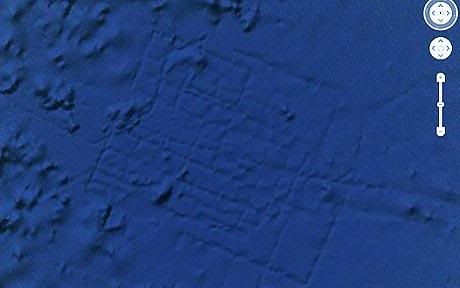
Featurered Website: Return to Atlantis.


Atlantis - The greatest legend of them all.

The story of Atlantis is perhaps the greatest legend of all. But is it more than just a legend? In plain language did Atlantis really exist? To investigate further why not pick from one of the many options listed below. The truth might astonish you..


Return to Atlantis.

Many believe that even today the influence of this once great island is real and apparent. They feel that sooner or later the second flourishing of this mighty Kingdom will bestride the world.


Not as an all conquering power but as an explosion of ideas that will herald the greatest era of peace and stability the Earth has ever known.

Featured Website: National Association for Scientific and Cultural Appreciation.


Reservoir of knowledge. NASCA is an organisation devoted to areas of science that are otherwise poorly covered.

Our aim is to explore and investigate the frontiers of this great reservoir of knowledge for the benefit of all.

The Main Ingredient. One of the prime necessities in exploring the world of the strange and unusual is an open mind.

Sunday, March 1, 2009

DIEGO DE ALMAGRO, (CA. 1478–1538)

Spanish conquistador in Peru and Chile

don Diego de Almagro / don Francisco Pizarro / en Castilla


Diego de Almagro was born in the town of Almagro in central Spain. He was of humble origins, having been abandoned as an infant on the steps of a local church.

Little else is known of his life before 1514, the year he accompanied PEDRO ARIAS DE ÁVILA on an expedition to Panama. Almagro became associated with FRANCISCO PIZARRO, with whom he entered into a partnership for the exploration and conquest of what is now Peru. From 1524 to 1528, he explored the northwest coast of South America in conjunction with Pizarro, taking part in military campaigns against Indians. In one encounter in 1525, he was wounded and lost an eye as well as some fingers.

Almagro provided financial support for Pizarro’s 1531 expedition against the Inca Indians. In 1533, he took part in the campaign that secured Quito in present-day Ecuador. Later that year, Almagro arrived at Cajamarca, Peru, where he joined Pizarro with a force of 200 men and played an important role in the conquest of the Inca. Although he received no gold for his participation, he was granted governorship of the lands south of Cuzco.

A conflict between Almagro and Pizarro was averted when, in December 1534, Almagro was appointed governor of the newly organized Peruvian province of New Toledo and given permission to lead an expedition of conquest southward.

Almagro, with a force of about 750 Spaniards and thousands of allied Indians, left Cuzco, northwest of Lake Titicaca, in July 1535. Inspired by reports of a civilization rich in gold and other valuables, Almagro led his men southward along the central ANDES MOUNTAINS into what is now Bolivia and northern Argentina. Having set out in the midst of the South American winter season, the Spanish suffered great hardships in the severe cold of the high Andes. At the San Francisco Pass, the expedition turned westward and reached the coastal Copiapó Valley. Almagro and his men continued southward along the coastal plain of present-day Chile into the Central Valley. Along the way, they were repeatedly attacked by Araucanian Indians. One of his lieutenants, Gómez de Alvarado, explored southward to the Itata River, north of what is now the city of Concepcíon. Failing to locate an advanced civilization comparable to the Inca, Almagro decided to head back northward to Peru. The return journey took the Spanish through the Atacama Desert, along the north coast of Chile, where many died of thirst.

By early 1537, Almagro had reached Arequipa in southern Peru, and from there he recrossed the Andes to Cuzco. At Cuzco, he found the Inca, under Manco, in open revolt against the Spanish. Almagro succeeded in suppressing the uprising but became embroiled in a conflict with Francisco Pizarro and his brother HERNANDO PIZARRO over who had the right to rule Cuzco and the northern provinces of Peru. Forces under Hernando Pizarro captured Almagro at Cuzco in April 1538. He was put to death by the garrote; his body was then publicly beheaded in the town square. In 1541, Almagro’s half-Indian son, Diego, known as “the Lad,” led a campaign against the Pizarros and, in revenge for his father’s death, killed Francisco Pizarro.

Diego de Almagro’s exploration south of Peru into Chile extended Spanish domination along the west coast of South America. On his return journey, he led his men on the first European crossing of the Atacama Desert.